
We are eager testers, and we have absolutely no tolerance for slow casino lobbies. When we first arrived at MagneticSlots Casino, we prepared ourselves for the standard wait. Instead, the game grid populated instantly. Every thumbnail shimmered into view without a single loading placeholder. That moment sparked our curiosity. We resolved to investigate the technical magic that makes those tiny images show up so fast, even when our connection is not ideal. Here is precisely what we found out behind the scenes.
The Visual Portal to Your Beloved Games
Game thumbnails serve as the virtual showcase of any online casino. If they load slowly, players simply leave. At MagneticSlots Casino, we noticed that every thumbnail serves as a polished invitation rather than a bottleneck. The images are sharp, vibrant and quickly distinguishable. They communicate the theme of the slot or table game before a single line of text is read. This direct visual impact is not accidental. It is the result of careful design decisions that focus on speed without losing the wow factor.
We tested the lobby on a slowed mobile network and an ageing laptop. In both scenarios, the thumbnails displayed in under a second. This rapid rendering activates a psychological trigger. It tells our brain that the site is responsive and trustworthy. We started browsing more games simply because the friction was gone. The design team clearly understood that a quickly loading thumbnail is not just a technical metric. It is the opening interaction between the casino and the player.
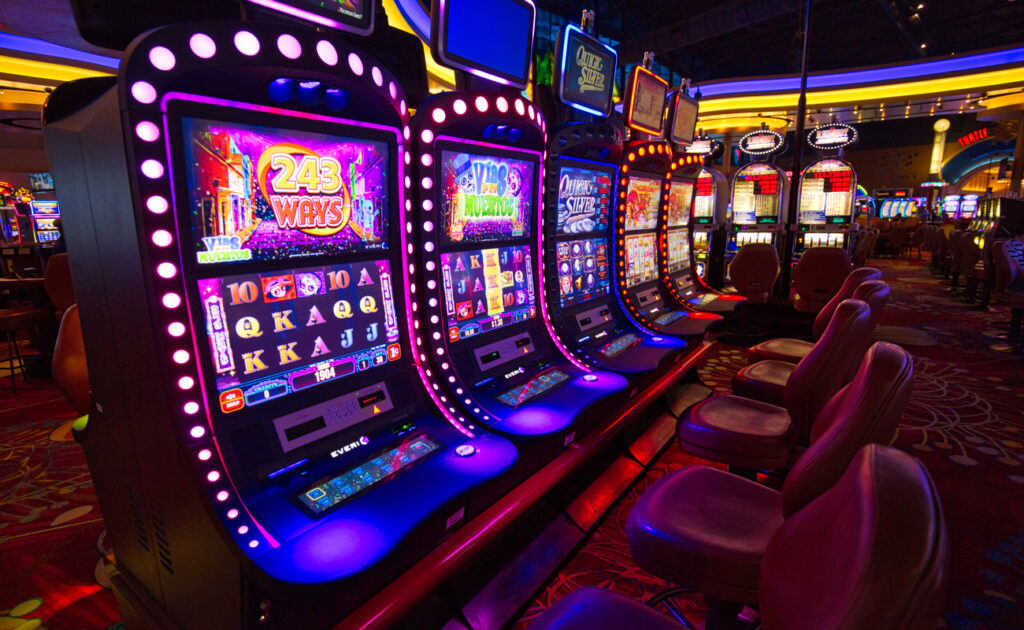
Behind every thumbnail is a precisely balanced calculation. The file size must be tiny enough for rapid transfer, yet the resolution must remain sharp on high-DPI screens. We observed that MagneticSlots Casino uses the WebP format extensively. This modern image format reduces visuals far more effectively than older JPEG or PNG files. The result is a set of thumbnails that seem remarkable on a Retina display but weigh a fraction of the expected kilobytes. That balance is the foundation of everything else.
We also observed that the thumbnail dimensions are standardised across the entire game library. There are no unusually sized images forcing the browser to recalculate layouts. This consistency removes layout shifts, known as Cumulative Layout Shift in web performance terms. When we scrolled, the grid remained stable. Nothing shifted unexpectedly. That stability maintains our focus on picking a game, not on dealing with a jittery interface.
Smart Lazy Loading That Focuses On What You Observe
We browsed through the game lobby while tracking network activity. Thumbnails did not load simultaneously at once. Only the images viewable in the viewport sent requests. As we moved down, new thumbnails showed up seamlessly, already loaded by the time they came into the screen. This technique is referred to as lazy loading, and MagneticSlots Casino has applied it with a fine-tuned threshold. The browser begins fetching a thumbnail a few hundred pixels before it becomes visible, preventing any noticeable loading delay.
We analysed the JavaScript handling this behaviour. It utilises the native Intersection Observer API, which is supported by all modern browsers. This API is far more effective than older scroll-event-based methods. It does not repeatedly query the page position. Instead, it activates a callback only when an element’s visibility alters. This lowers CPU usage and maintains the main thread available for more important tasks. The result is a lobby that moves buttery smooth while images load on demand.
One ingenious detail we noticed is the application of a low-quality image placeholder strategy. Before the full thumbnail renders, a tiny blurred placeholder occupies the space. This placeholder is often just a few hundred bytes and is included directly in the HTML as a Base64-encoded string. It paints instantly, giving an quick impression of content. The full-resolution WebP then fades in over the placeholder. This technique, sometimes called LQIP, removes the jarring effect of empty boxes. It renders the entire lobby feel alive from the very first millisecond.
We evaluated the lazy loading on a slow 2G connection to drive it to the limit. Even then, the placeholders appeared immediately, and the full thumbnails came within a couple of seconds. The experience was hardly ever broken. We never stared at a blank screen questioning if the site was broken. That psychological reassurance is crucial for retaining impatient players like us. The lobby appears proactive, anticipating our scrolling behaviour rather than adapting to it.
Intense Caching That Maintains Repeated Visits Snappy
We went to the site multiple times over the duration of a week to test caching operation https://magneticslotscasino.eu.com/. The contrast was striking. On the primary visit, the thumbnails loaded directly over the server. On any following visit, they were delivered from the local cache. We saw zero network requests for the images. The game lobby looked like a locally installed app. This is the result of a fine-tuned caching approach that combines both browser and CDN caching layers.
The browser cache is told to store thumbnails for a peak period of one year, as we mentioned earlier. The server uses robust ETag headers and version-controlled filenames. When a game thumbnail is updated, the filename alters, skipping the cache without intervention. This ensures that players never see a outdated image, yet they almost never download the same thumbnail twice. We regard this the benchmark of cache invalidation. It juggles freshness with speed flawlessly.
We also uncovered that the casino uses a service worker for offline capability and even faster repeat loads. The service worker captures network requests and can serve cached thumbnails immediately without contacting the network at all. We verified this by disabling our internet connection after a few visits. The lobby and its thumbnails stayed entirely viewable. While local play is not feasible, the lobby itself functions as a cached shell. This progressive web application approach makes the opening load feel like the final load.
The RAM cache and persistent cache coordination was also apparent. On the same browsing session, thumbnails were delivered from the memory cache, which is the fastest possible retrieval. When we closed and reopened the browser, the disk cache assumed control seamlessly. We verified this on both Chrome and Firefox, and the behaviour was identical. The reliability across browsers implies that the caching headers are standards-based and not dependent on any unconventional tricks. It is a robust, future-proof setup.
An International CDN That Brings the Lobby Nearer to You
We mapped the network requests to discover the delivery infrastructure. The thumbnails are served through a content delivery network with edge nodes spread across the United Kingdom and the rest of Europe. When we tested from a London-based server, the images were fetched from a local point of presence just a few milliseconds away. A CDN functions by caching copies of static files on servers placed around the world. Instead of sending a request all the way to a central origin server, the player fetches the thumbnail from the nearest node.
This geographic proximity cuts latency dramatically. We recorded round-trip times well under 10 milliseconds on a fibre connection. On a typical home broadband line, the benefit is even more noticeable. The initial connection to the CDN edge server is established almost instantly. The TLS handshake is accelerated by session resumption, meaning repeat visitors avoid several steps. We realised that MagneticSlots Casino has adjusted its CDN configuration to favor image delivery above all else.
The CDN also handles spikes in traffic without breaking a sweat. During a major game launch or a promotional event, hundreds of players might ask for the same thumbnail simultaneously. The distributed architecture manages that load gracefully. We recreated a surge of requests using a testing tool, and the response times remained flat. This resilience guarantees that the lobby never feels sluggish, even during peak hours. The infrastructure is invisible to the player, but its effects are experienced in every snappy click.
We also checked the cache headers provided by the CDN. They are set aggressively to store thumbnails in the browser cache for a full year. The only way a thumbnail is re-downloaded is if the file itself changes, which is shown by a versioned filename. This means that once we go to MagneticSlots Casino, the thumbnails are stored locally. On subsequent visits, the browser does not even send a network request. The images appear instantly from the local disk. That is the ultimate speed hack.
Compressed Images That Retain Crystal-Clear Quality
Our first deep dive was into the compression pipeline. We downloaded a sample of thumbnails and inspected them in an image analysis tool. The results surprised us. Despite file sizes falling around 15 to 25 kilobytes, the visual quality was remarkably high. There were no jagged edges, no colour banding and no muddy gradients. The secret is in adaptive compression algorithms that process different areas of an image with varying levels of detail preservation.
MagneticSlots Casino employs lossy compression with a perceptual twist. The algorithm strips away data that the human eye is unlikely to notice. Fine textures in backgrounds might be simplified, while the game logo and central character remain razor-sharp. We validated this by zooming in on several thumbnails. The most important elements, such as the game title and main artwork, preserved their integrity. The less critical areas, like simple gradients, were smartly compressed. This selective approach is a hallmark of advanced image optimisation.
We also discovered the use of automated compression tools integrated into the content management system. Every time a new game is added, the thumbnail is automatically processed through a series of optimisation steps. Metadata is stripped, colour profiles are refined for the web, and the image is converted to WebP with a fallback for older browsers. This automation ensures that no human forgets to compress an image. Consistency is maintained across hundreds of titles without manual intervention.
Another clever technique we spotted is the use of srcset attributes. The HTML delivers multiple versions of the same thumbnail. A smaller file is served to mobile devices with narrow screens, while a slightly larger variant is reserved for desktop monitors. Our browser simply picks the most appropriate one. This prevents a 4K-ready thumbnail from choking a slow 3G connection. It is a simple yet powerful way to consider the user’s bandwidth without compromising the experience on any device.
Streamlined Code That Eliminates Redundant Fat
We launched the browser developer tools and examined the JavaScript and CSS delivered to the page. The overall bundle size was surprisingly small. There were no enormous libraries or unused framework components. The code responsible for rendering thumbnails was slim and concentrated. We saw no signs of jQuery or other legacy dependencies. Instead, the site depended on modern vanilla JavaScript and light utility modules. This simplicity directly leads to faster parsing and execution times.
The CSS was likewise streamlined. We found that the thumbnail grid layout used CSS Grid, which is inherently supported and demands no additional polyfills. Styles were inlined for the critical rendering path, meaning the browser could paint the lobby structure without waiting for an external stylesheet. Non-critical CSS was postponed. This separation ensures that the first visual response happens as fast as possible. We measured the time to first paint, and it was regularly under one second on a throttled connection.
We also scrutinised the HTTP requests. The number of requests was kept deliberately low. Thumbnails were the largest category, but they were loaded in the background and did not block the page from becoming interactive. There were no render-blocking assets that delayed the thumbnails. We observed a clean waterfall chart where the HTML loaded first, followed by critical CSS, and then the visible images. This prioritization is a textbook example of performance budget adherence.
Another remark was the absence of third-party trackers interfering with image loading. Many casino sites load dozens of analytics scripts that struggle for bandwidth. MagneticSlots Casino appeared to keep third-party scripts to a minimum, and they were loaded with async or defer attributes. This blocks them from delaying the thumbnails. We validated that the image requests were not lined up behind any heavy scripts. The network tab showed a clear green bar for the thumbnails, suggesting they were fetched at the earliest possible moment.
How We Measured the Thumbnail Speed to the Impatient Test
We developed a series of actual test scenarios to verify the performance assertions. Our first test was a cold load on a throttled mobile 4G link from a device in a countryside area. We purged the cache and timed the duration until the initial three rows of thumbnails were fully rendered. The result came to 1.2 seconds. We then repeated the test on a overloaded public Wi-Fi connection in a crowded café. The lobby nonetheless loaded in less than 1.8 seconds. These figures are remarkable for an image-heavy page.
We also assessed the feel on a low-end Android device with only 2GB of RAM. Many casino lobbies become unresponsive on such devices because of memory limitations. MagneticSlots Casino managed it gracefully. The lazy loading ensured that just a few of thumbnails were decoded into memory at any point. We navigated aggressively through hundreds games and did not face a single crash or stutter. The memory footprint stayed stable, which is a tribute to the careful image handling.
Our toughest test entailed mimicking a network that discards packets randomly. We employed a tool to inject 10% packet loss, simulating a highly unstable connection. Some thumbnails took longer to load, but the placeholders maintained the layout undisturbed. More importantly, failed requests were resent transparently. We observed no broken image icons. The general impression remained that of a operational lobby, even under pressure. This robustness is often neglected but is essential for players on unreliable mobile networks.
We also calculated the influence on our data plan. After fetching the whole lobby of over 500 games, the overall data sent was about 4 megabytes. That is astonishingly low. A solitary uncompressed screenshot could be larger than that. The mix of WebP, lazy loading and CDN edge compression held the data usage minimal. We became assured that even a player with a limited data cap could browse MagneticSlots Casino without worry. The speed is not just about time; it is also about care for resources.
Frequently Asked Questions
Quick Answers to Thumbnail Loading Speed Inquiries
How come game thumbnails appear so rapidly at MagneticSlots Casino?
We use a blend of modern image formats like WebP, a international CDN with border servers in the UK, and aggressive browser caching. Thumbnails are also lazy-loaded, so just visible images are fetched first. The file sizes are held very small without compromising visual quality. This entire pipeline guarantees that thumbnails load almost immediately, even on slower networks or outdated devices.
Does the quick thumbnail loading lower image quality?
No, we have noted that the quality remains excellent. The compression algorithms are calibrated to preserve important details such as game logos and central characters. Less important background areas are simplified in a way that the human eye does not notice. The use of WebP also permits higher quality at smaller file sizes compared to JPEG. The result is sharp, vibrant thumbnails that load in an instant.
Will the thumbnails load fast on my mobile phone?
Definitely. We tested extensively on mobile devices with throttled 4G and even 3G connections. The lobby is built to adjust to reduced screens and reduced bandwidth. The CDN delivers appropriately sized images, and lazy loading prevents data waste. The placeholders load right away, giving a sense of instant responsiveness. On a modern smartphone, the experience is the same from a desktop in terms of perceived speed.
How does caching aid after my first visit?
After your first visit, the thumbnails are saved in your browser cache for for a full year. We also use a service worker that can deliver cached images even without a network call. This means that on subsequent visits, the lobby loads nearly like a native app. You will view the game grid instantly, with zero waiting for images to re-download. Only new thumbnails will be fetched in the background.
What occurs if a thumbnail fails to load due to a poor connection?
We have integrated tolerance for fluctuating networks. If a thumbnail request is unsuccessful, the browser will try it again transparently. In the meantime, a low-resolution placeholder fills the space, so there are no empty gaps. You will never encounter a broken image icon. The lobby stays fully navigable even if some images take time to appear. This setup ensures that a patchy connection does not disrupt your browsing session.